Lab Grown Diamonds - Questions
Table of ContentsThe Facts About Lab Grown Diamonds RevealedThe smart Trick of Lab Grown Diamonds That Nobody is DiscussingNot known Facts About Lab Grown Diamonds8 Simple Techniques For Lab Grown Diamonds
As you take a trip closer to the Planet's core, pressure and temperature level rise, which develops the perfect oven for carbon to be exchanged ruby (rubies are the only gems to be made from purely one component). Via a huge volcanic eruption, these diamonds were transferred to the Planet's surface area. It's approximated this process was relatively quick (probably over the course of several hours), which allowed the diamonds to stay undamaged without melting.The brief response: carat weights determine the mass of rocks, karats measure the purity of gold. Carat weight: 1 carat weight amounts to 0.2 grams, regarding the weight of a paperclip (next time you see a picture of Mariah Carey's 35 carat involvement ring, simply think of the problem of carrying 35 paper clips around your finger each day).
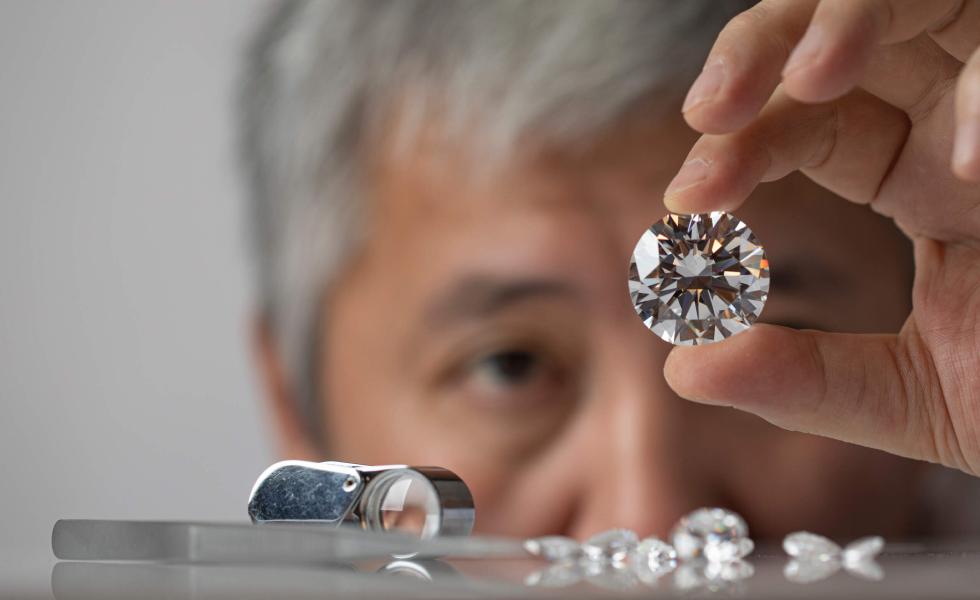
Here are several of the key benefits of lab expanded rubies and laboratory grown diamond jewelry:.
Lab Grown Diamonds Can Be Fun For Everyone
Place merely, all-natural or earth-mined diamonds are crafted over countless years underneath the Planet's crust from pure carbon incorporated with stress and warm. Producing rubies in a laboratory needs the exact same process, just fine-tuned to take place over a much smaller timespan in a a lot more controlled setting.
Whereas earth-mined rubies are unusual and finite and often tend to boost in cost over time, lab diamonds are conveniently available., like lab-grown ruby rings, they will not be a great fit for your requirements.
They might assume that the cons of lab-grown diamonds outweigh the pros. Problems, wars, and human rights concerns are all come together with the ruby industry. That said, the ruby industry does offer revenue to third-world countries. Some might argue that, therefore, buying a lab-made diamond additionally comes with its moral considerations, as doing so takes revenue away from those associated with the natural diamond market who may require it most.
Traditional rubies count on the Planet's problems to determine their quality or lack thereof. But in a laboratory, manufacturers can straight manage a diamond's top quality. Yes, there are honest and environmental factors to consider with both extracted and manufactured diamonds. Suppose your spending plan just permits you to look for details colors or cuts of natural rubies.
The smart Trick of Lab Grown Diamonds That Nobody is Talking About
You can quickly find tinted, manufactured rubies on the (reasonably) low-cost side as well as particular cuts that would certainly be more expensive if you were shopping for an extracted ruby only. That rarely suggests it isn't worth shielding.
all-natural diamonds is that the last is mined from all-natural deposits in the Planet while the former is made in a laboratory utilizing controlled setups. Their top quality is largely the exact same. While the distinction in between lab-grown and natural ruby options are very little when it pertains to quality, some of the disadvantages of lab-grown rubies include the reality that the stone will decrease over time and, to some, an absence of sentimental value that's often connected with mined rubies
The process includes minimal land interruption and eliminates problems related to logging and environment destruction. Lab-grown diamonds are usually much more budget friendly than natural diamonds. This price difference can be credited to the streamlined production process and the evasion of expenditures related to standard mining. The Controlled Environment in Which Laboratory Grown Diamonds Are Produced Enables Regular Top Quality.
Versatility in Layout - Lab Grown Diamonds Offer Designers and Consumers a Versatile Scheme to Develop Distinct and Innovative Jewelry Styles. the Controlled Development Refine Enables The Manufacturing of Diamonds in Different Sizes And Shapes. Lab Ruby Bands are the A Lot Of Famous Among Laboratory Diamond Jewelry. Lab Rubies Typically Include A More Clear Supply Chain.
Excitement About Lab Grown Diamonds
Market Perception - Regardless Of Their Similar Physical Properties, Laboratory Diamonds Might Face Challenges in Market Assumption. Some Consumers Still Perceive Natural Diamonds as Having Greater Worth and Reputation. The Production of Lab-Grown Diamonds Can Be Energy-Intensive, Particularly in Techniques Like High Pressure Heat (hpht) and Chemical Vapor Deposition (cvd).
All-natural Diamonds Are Created Over Millions of Years Deep Within the Earth, Adding To Their Perceived Rarity. Lab-Grown Diamonds, In Spite Of Their The Same Characteristic, May Not Bring the Very Same Rarity Factor, Impacting Their Perceived Value for Some Customers. Influence On Diamond-Dependent Economic Climates - the Shift Towards Laboratory Grown Diamonds May Have Economic Ramifications for Countries and Communities that Rely On The Ruby Mining Sector.
Ans. Laboratory Rubies Are of Equal Quality to Natural Diamonds in Terms of Solidity, Brilliance, and Clearness. the Top quality of A Ruby, Whether Lab-Grown or Mined, Is Identified by Its Cut, Color, Quality, and Carat Weight. Ans. Yes, Laboratory Diamonds Shimmer Simply Like Natural Diamonds. Their Luster and Sparkle Are a Result of Their Cut and The Way Light Connects with Their Facets. Ans.